
One team through every level of care
I am Mark Gladden, the founder of Present Moments Recovery. I built this program because I have lived the other side of addiction, and because too many families get treated like a number instead of a person. When you reach out here, there is a good chance you will talk with me directly. Not a call center. Not a salesperson. A real conversation with someone who understands this personally and professionally.
This page is the honest, plain-English overview of what addiction treatment with us actually looks like. No jargon, no scare tactics. Just what we do, how the pieces fit together, and what your next step could be.
Explore each level of care

Physician-Directed Withdrawal Management
Residential Detox and Withdrawal Management in San Marcos, plus separate outpatient withdrawal management in Carlsbad.
Learn more
Outpatient Detox
Lower-acuity, medically supported detox in Carlsbad for clients with safe support at home.
Learn more
Residential Treatment
Round-the-clock residential care in a small, single-family home, typically fewer than six clients.
Learn more
Partial Hospitalization (PHP)
Structured daytime treatment at our Carlsbad location, higher support than IOP.
Learn more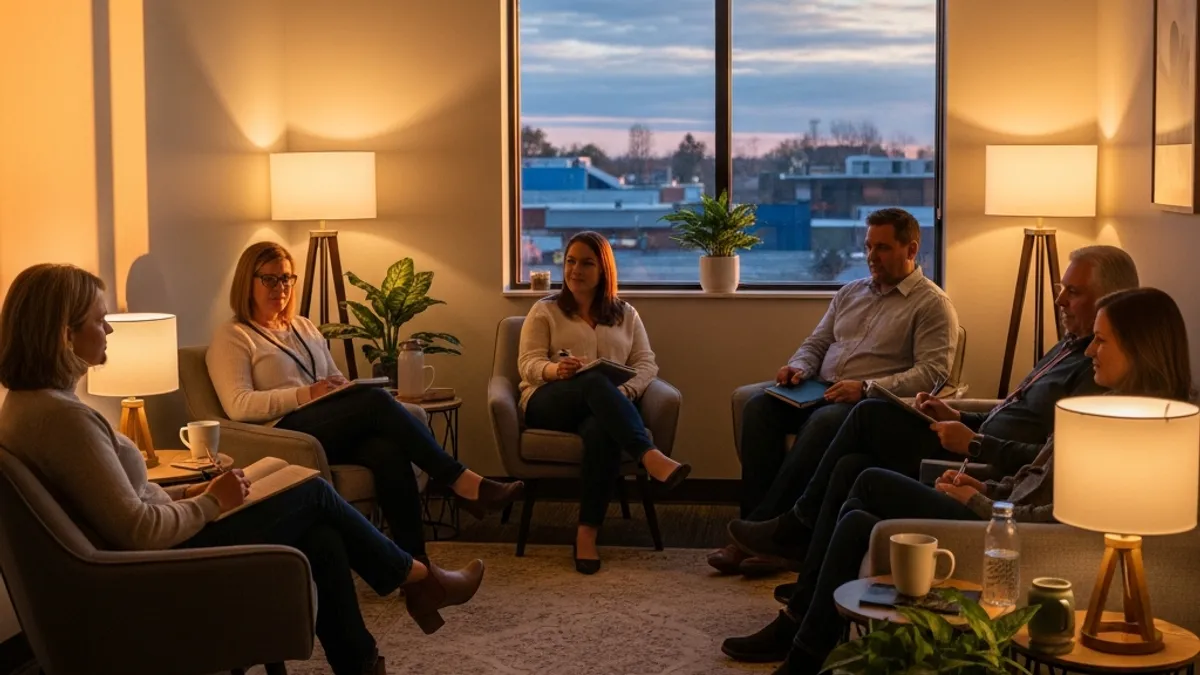
Intensive Outpatient (IOP)
A DBT-focused intensive outpatient program in Carlsbad for adults 18+, with flexible day and evening structure.
Learn more
Medication-Assisted Treatment (MAT)
Physician-prescribed medication as one part of a broader clinical program, never a stand-alone fix.
Learn more
Structured Sober Living
Structured sober living for men at By the Sea Recovery in San Marcos, a non-treatment level of care.
Learn more
Aftercare & Alumni
The 'through recovery' promise, alumni community, check-ins, and continuing-care planning after treatment.
Learn more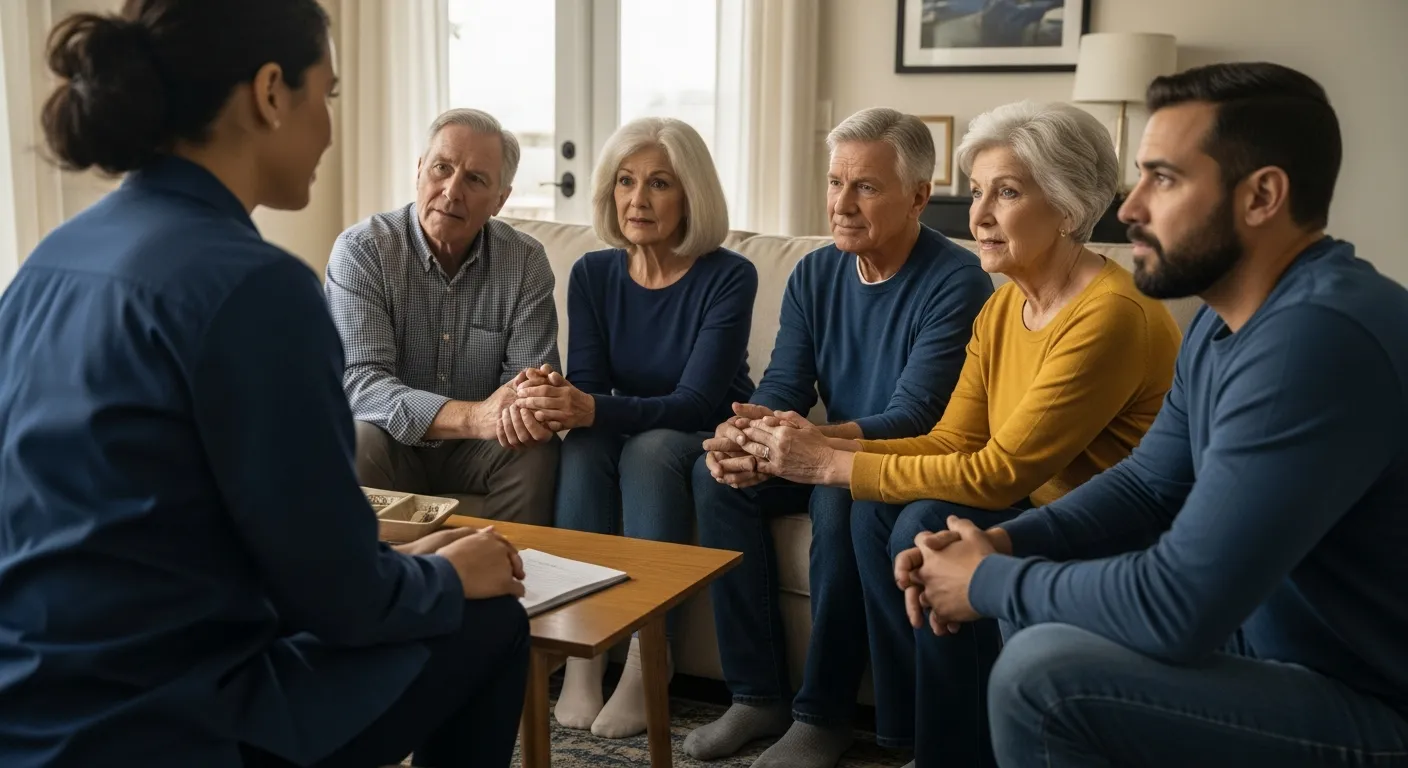
Intervention Support
Guidance for families in crisis on when and how to approach a loved one who isn't ready for help.
Learn moreOur Continuum of Care
Compare treatment levels and see how support can change as needs change.
Learn moreThere is never any obligation
Many people reach out just looking for information or guidance, and never enter treatment from that first call. That is completely okay. You can call or text us, often me, simply to talk things through.
What addiction treatment actually is
Addiction is a treatable medical condition, not a character flaw or a failure of willpower. Real treatment is a structured, clinical process that helps the body stabilize, helps the mind heal, and helps a person rebuild a life worth staying sober for. It usually moves through different levels of care, from more intensive support at the start to lighter support as someone grows stronger.
The right starting point is different for everyone. It depends on the substance, the history, physical health, mental health, and what is happening at home. That is why the first thing we do is listen, not sell.
One connected team, from the first call to long after
The single biggest difference families notice here is continuity of care. Most programs offer one piece of the puzzle and then hand you off to strangers. We guide people through the full continuum whenever it is clinically appropriate, with the same team staying alongside them the whole way. You build trust with your counselor once, and that relationship carries you from the first day through every transition that follows.
“The beauty of our Continuum of Care model is a consistent treatment team from the beginning of the journey until the client is ready to fly solo. Clients are able to establish trust with their primary counselor, while the team supports them from the first day of care through their transition into the next appropriate stage of recovery.”
The levels of care we provide
Detox is often the first step when the body has become physically dependent. Physician-directed withdrawal management supports symptom monitoring and risk reduction, with medication when clinically appropriate; it does not guarantee that complications will not occur. For some situations, outpatient withdrawal management is an appropriate option after individualized assessment.
Residential treatment offers a structured, supportive environment to focus fully on early recovery, away from daily triggers. From there, partial hospitalization (PHP) provides intensive daytime treatment while a person begins reentering normal life, and intensive outpatient (IOP) lets them keep working, studying, or caring for family while continuing care.
Medication-Assisted Treatment (MAT) can be one part of care when it is clinically appropriate, especially for opioid or alcohol use. Medication is never the whole plan on its own. It works alongside counseling, relapse prevention, and family support. And because healthy routines are what make recovery last, structured sober living helps bridge the gap between treatment and independent life.
Our clinical approach
We are a clinically based treatment program. Our work is built on proven therapies that help people understand their patterns, regulate emotions, and stay engaged in recovery. People often ask whether we are a 12-step program. The honest answer is that we are not built around any single pathway. During treatment we introduce people to a range of recovery supports, including 12-step, faith-based, secular, and peer communities, and we help each person find what genuinely works for them.
“Present Moments Recovery is a clinically based treatment program. We are not a 12-step-based clinical program. We may introduce clients to 12-step meetings, faith-based recovery, and other peer-support options because long-term recovery often requires connection after treatment. Our clinical work is built around evidence-based methods such as DBT, CBT, Motivational Interviewing, relapse prevention, family involvement, MAT when appropriate, and continuing-care planning. We respect each client's path and help them identify recovery supports they can continue using after they leave treatment.”
The therapies we use

Cognitive Behavioral Therapy (CBT)
Identifying the thoughts and patterns behind substance use and replacing them with healthier ones.
Learn more
Dialectical Behavior Therapy (DBT)
Practical skills for emotional regulation, distress tolerance, and staying steady under pressure.
Learn more
Motivational Interviewing (MI)
Strengthening a person's own reasons for change, without lecturing or pressure.
Learn more
Trauma-Informed Care
Care that recognizes the role of past trauma in substance use, without re-traumatizing.
Learn more
Family Therapy
Bringing the family into recovery with honest conversation and clear boundaries.
Learn more
Relapse Prevention
Building the skills, routines, relationships, and purpose that support lifelong recovery.
Learn moreA small program, on purpose
Many treatment centers run large groups with dozens of clients at once. That model works for some people. Ours is intentionally different. Because we stay small, we can offer more individual attention, more personalized planning, stronger staff relationships, and a deeper understanding of each person's real circumstances. People are not numbers here. They are individuals with families, histories, fears, and goals, and treatment should reflect that.
Addiction affects the whole family
By the time a family calls us, everyone has usually been affected. Parents are exhausted, partners are overwhelmed, trust has been strained, and communication has broken down. One of the first things I tell family members is this: you did not cause it, you cannot control it, and you cannot recover for your loved one, but you can learn to support recovery in healthier ways. Families deserve support too, and ours are part of the process, not an afterthought.
Support for families

What we treat
We work with adults facing a wide range of substance-related challenges. Whatever brought you here, the goal of that first conversation is simply to understand what is happening and what kind of help might fit.
Substance use and co-occurring conditions

Alcohol
Help for alcohol use disorder, from physician-directed withdrawal management through outpatient care and continuing recovery.
Learn more
Opioids & Fentanyl
Treatment for opioid and fentanyl use, including MAT when it's clinically appropriate.
Learn more
Stimulants (Meth & Cocaine)
Care for stimulant use, including methamphetamine, cocaine, and misused prescription stimulants.
Learn more
Benzodiazepines
Medically supervised care for dependence on benzodiazepines like Xanax, Ativan, or Klonopin.
Learn more
Prescription Drugs
Care for dependence on prescription medications, painkillers, sedatives, and stimulants alike.
Learn more
Co-Occurring Disorders (Dual Diagnosis)
Integrated care when mental health and substance use happen together, treated as one, not two.
Learn more
Trauma & PTSD
Trauma-informed care that addresses the pain so often beneath substance use.
Learn moreDual diagnosis: treating mental health and addiction together
Substance use and mental health so often go hand in hand. Many people arrive carrying anxiety, depression, trauma, PTSD, or other concerns alongside their addiction. Treating one while ignoring the other usually leads to frustration and relapse. Our team works to understand the full picture and addresses both together as part of one unified plan.
Serving families across San Diego County
We are based in North County San Diego and proudly serve families throughout the county, including Carlsbad, San Marcos, Encinitas, Oceanside, Vista, Escondido, Solana Beach, Del Mar, Rancho Santa Fe, La Jolla, Poway, and the greater San Diego area. We also regularly work with families from across California and beyond who are seeking treatment here. Addiction does not follow zip codes, and recovery should not be limited by them.
What happens when you call
A lot of people worry they will not know what to say. That is completely normal. You do not need to prepare, you do not need to know which level of care is right, and you do not need to understand your insurance benefits. That is our job. We will simply talk through what is happening right now, any immediate safety concerns, the history, and the next best step. Some calls last ten minutes, some last thirty. Whatever it takes, because understanding your situation matters more than rushing through a checklist.
Insurance and cost
Cost is one of the first worries most families have, and I get it. PMR may work with PPO and POS plans that include authorized out-of-network benefits. We will help you understand your benefits and any estimated out-of-pocket responsibility as clearly as we can before any decision is made. Please note we do not accept Medicare or Medi-Cal.
“I know cost is one of the first worries families have. My goal is to take the confusion out of it. We verify your benefits, explain what insurance may cover, and walk through any estimated out-of-pocket responsibility as clearly as we can. Treatment has real costs, but families should never feel pressured, surprised, or left alone trying to figure it out.”
Understand your coverage

Check Your Insurance
A quick, confidential benefits check tells you what your plan may cover, before anything else happens.
Learn more
Paying for Treatment
Learn how insurance, private pay, estimates, and financial responsibility are discussed before care begins.
Learn moreThe Cost of Treatment
Learn how insurance, private pay, estimates, and financial responsibility are discussed before care begins.
Learn moreA note from me
Recovery changed my life. It restored relationships, opened doors I never thought possible, and taught me that people are capable of far more growth than they believe. Every day I get to speak with families during some of the hardest moments of their lives, and every day I watch people rebuild, reconnect, and find a future they once thought was gone. That is why we do this. People deserve more than sobriety. They deserve a better life than they have ever had, and recovery makes that possible.
Every case is individual
There is no single path through addiction. Where someone starts, and how care unfolds, depends on their health, history, and goals. The first step is just a conversation. When you are ready, call or text us, often me, at (619) 363-4767. No pressure, just a conversation.
Frequently asked questions
How do I know if someone needs addiction treatment?
If substance use is affecting health, relationships, work, finances, legal standing, or quality of life, it is worth a professional conversation. You do not need to wait for someone to hit rock bottom before reaching out for help.
What is the first step in addiction treatment?
The first step is simply a conversation so we can understand what is happening. From there we can help identify whether detox, residential treatment, outpatient care, or another level of support is the most appropriate place to begin.
Does everyone need detox?
No. Everyone’s situation is different. Some people need physician-directed withdrawal management because withdrawal may be difficult or medically serious. Others may be able to begin with residential treatment, PHP, IOP, or outpatient care. The first conversation and clinical assessment help us determine the appropriate place to start.
How long does addiction treatment last?
It varies with clinical needs, substance use history, mental health factors, and recovery progress. Recovery is not one-size-fits-all, and many people benefit from moving through several levels of care over a number of months.
What substances do you treat?
We treat alcohol, opioids and fentanyl, methamphetamine and other stimulants, cocaine, benzodiazepines, prescription drugs, and polysubstance use, among others.
Do you provide dual diagnosis treatment?
Yes. Many people entering treatment also live with anxiety, depression, trauma, PTSD, or bipolar disorder. We treat substance use and mental health together as part of one integrated plan.
Is addiction treatment covered by insurance?
Many treatment services may be covered by commercial PPO plans, though coverage varies by provider, policy, medical necessity, and level of care. We will help you understand your benefits and what may be available. We do not accept Medicare or Medi-Cal. PMR is an in-network provider for TRICARE and TriWest. Eligibility, benefits, authorization requirements, and clinical criteria vary by plan and must be verified before admission. Coverage, authorization, admission, placement, and payment are not guaranteed.
What makes Present Moments Recovery different?
Full continuity of care, founder-led conversations, a small program environment, CARF accreditation and DHCS licensing, a family-centered approach, and a focus on building a meaningful life well beyond treatment.
Can I call even if I am not ready for treatment?
Absolutely. Many people reach out just looking for information, guidance, or help understanding their options. There is never an obligation to enter treatment simply because you contacted us.
What if my loved one refuses help?
This is one of the most common situations families face. Even when someone is resistant, there are often productive steps a family can take. A conversation with us may help clarify the options and next steps.
Do you accept clients from outside San Diego County?
Yes. We regularly work with individuals and families from throughout California and across the country who are seeking treatment in North County San Diego.
Is recovery really possible?
Yes. Recovery is not easy, but every day we watch people rebuild relationships, restore their health, and create lives that once felt impossible. It remains possible no matter how hopeless things may feel today.