
Real treatment that fits around work, family, and life
Recovery does not end when someone leaves detox or residential treatment. In a lot of ways, this is where one of the most important phases of recovery actually begins.
During residential treatment, your loved one lives in a structured place where they are supported and watched over throughout the day. A lot of families describe that stretch as a protected space, somewhere their person can stabilize and focus on recovery without the pressures of daily life. When they leave, that environment naturally changes. Responsibilities come back. Work schedules resume. Family life gets active again. There is more freedom and more unstructured time, and those can be some of the most vulnerable moments in early recovery.
Outpatient treatment exists to support people through exactly that transition. At Present Moments Recovery, outpatient care is part of our Continuity of Care model. It helps people move from intensive treatment into everyday life with continued clinical support, accountability, and encouragement, instead of facing it all alone.
What outpatient addiction treatment means
Outpatient treatment lets your loved one keep working on recovery while living outside the residential environment. It fits people who can hold enough stability outside a 24-hour setting to take part safely and honestly in treatment. This stage helps rebuild daily routines while structured therapy and recovery work continue. Outpatient care focuses on:
- Strengthening relapse-prevention skills
- Processing real-world stress and emotional triggers
- Continuing the therapeutic work that began in residential treatment
- Keeping accountability and structure in place
- Building confidence in long-term recovery
Rather than pulling people out of everyday life, outpatient programs help them practice recovery while navigating real situations.
Why outpatient care matters after residential
Leaving residential treatment can be both exciting and hard. In residential care, people are surrounded by clinical staff, peers in recovery, and a structured day, with support available the whole time and the focus entirely on recovery. The outside world changes that. Stress returns. Responsibilities return. Triggers can show up again. Outpatient treatment is a structured step-down: people keep getting clinical support while they gradually rebuild independence, instead of going from full structure to complete independence overnight.
Processing real life in a clinical setting
One of the most valuable parts of outpatient care is that it lets people bring real-life challenges into a safe clinical space. As they return to daily life, they may run into:
- Workplace stress
- Family conflict
- Relationship challenges
- Emotional triggers
- Unexpected cravings or relapse thoughts
In outpatient sessions, people process these with their clinical team and peers instead of holding them in or reacting the way they might have before treatment. They learn to talk through hard situations, explore healthier responses, build emotional resilience, and strengthen their recovery strategies. That is how confidence and long-term sobriety get built.
Outpatient treatment guides

Partial Hospitalization (PHP)
Structured daytime treatment at our Carlsbad location, higher support than IOP.
Learn more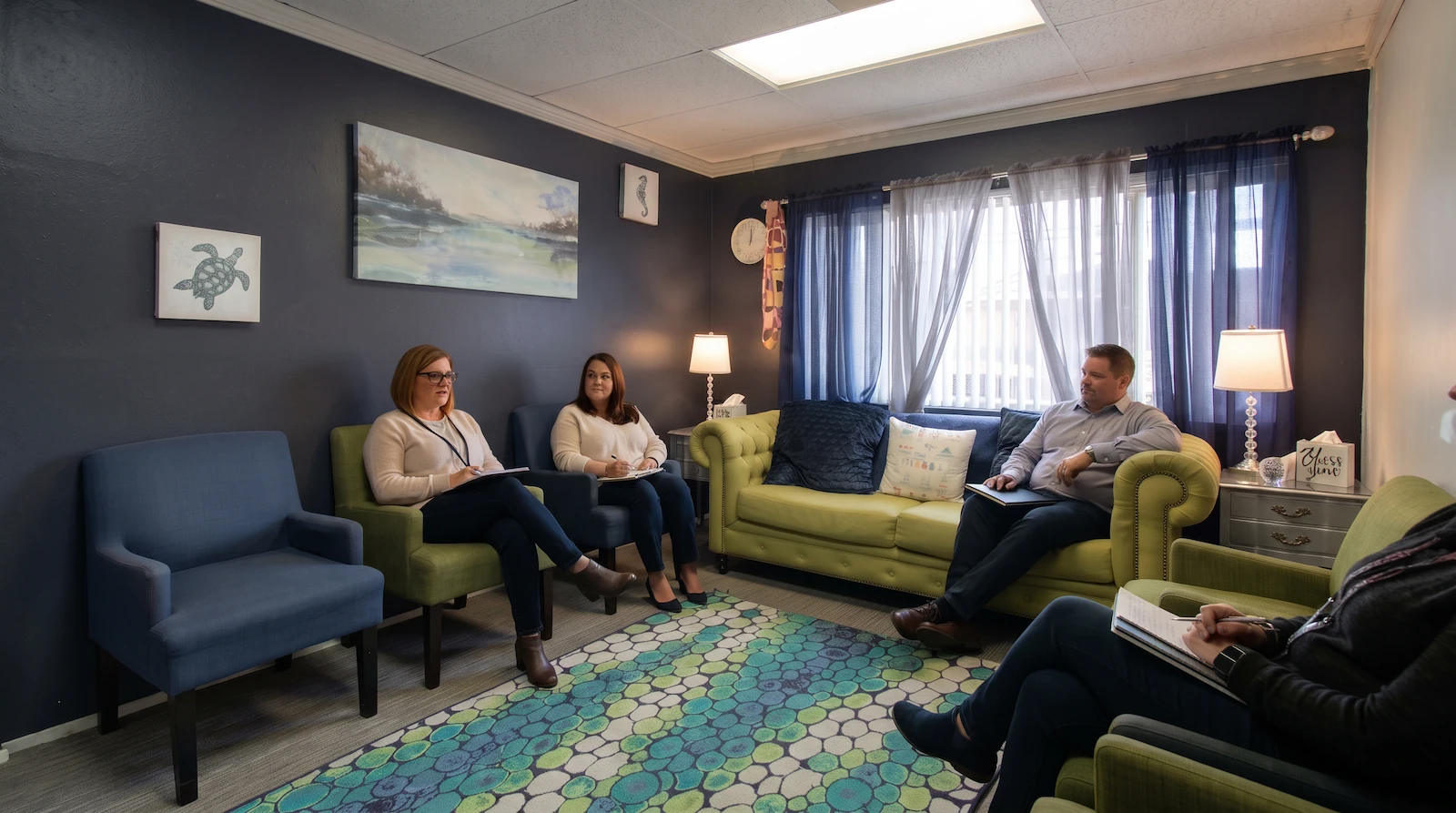
Intensive Outpatient (IOP)
A DBT-focused intensive outpatient program in Carlsbad for adults 18+, with flexible day and evening structure.
Learn more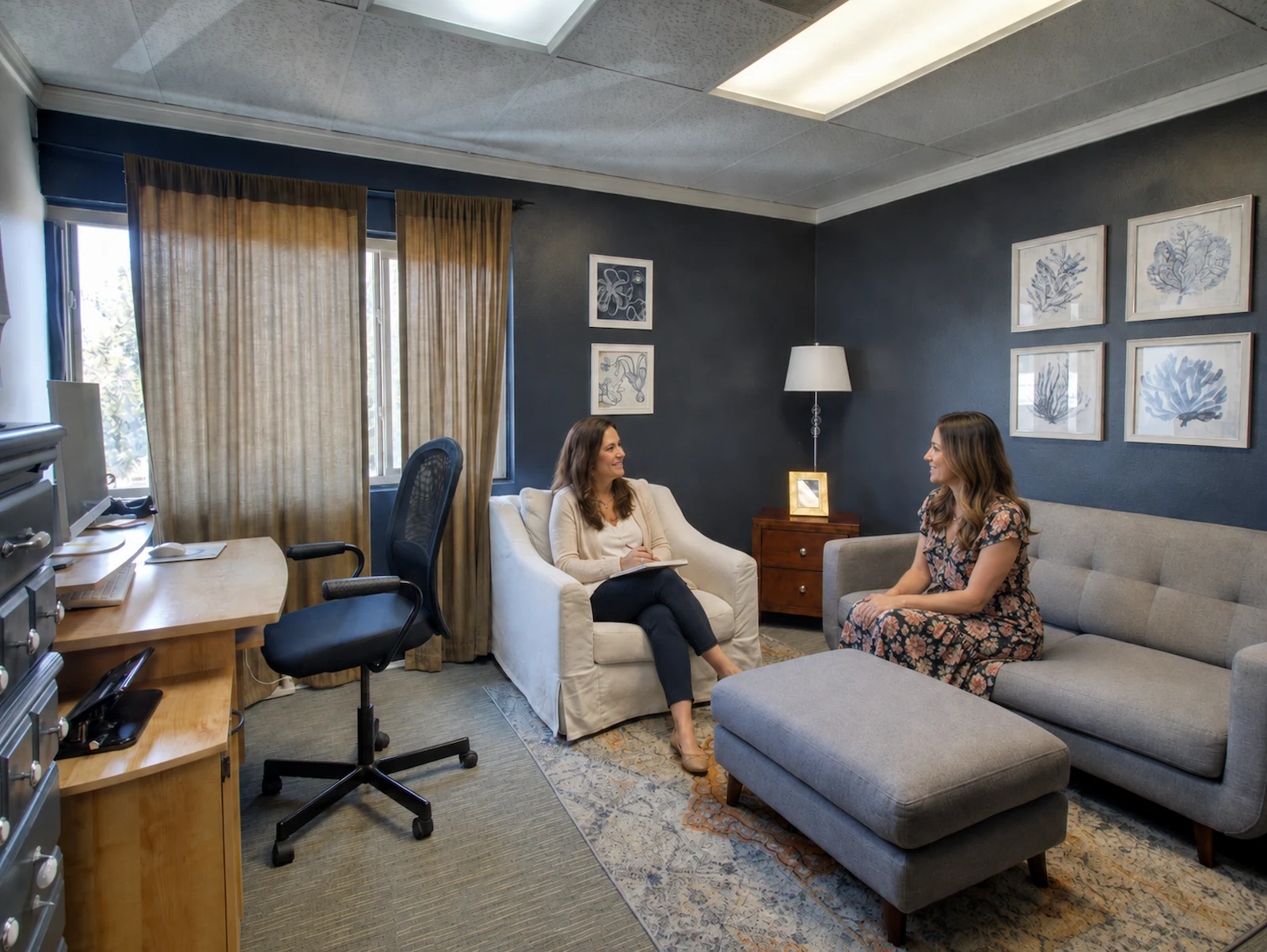
Outpatient Level 1
The lightest level of outpatient care, about four hours a week, designed to protect long-term recovery after PHP and IOP.
Learn more
PHP vs IOP for Cash-Pay Families
Paying for treatment yourself? Here is how we help families weigh PHP against IOP, and why steady, longer-term support often gives the best shot at lasting recovery.
Learn more
Outpatient Detox
Lower-acuity, medically supported detox in Carlsbad for clients with safe support at home.
Learn moreContinuity of Care
Compare treatment levels and see how support can change as needs change.
Learn morePHP or IOP: What's the Difference?
PHP is daytime outpatient care in Carlsbad with approximately 30 or more clinical hours each week. IOP provides approximately nine clinical hours in the evening, with more flexibility for work, school, and family responsibilities. Both are outpatient programs; placement depends on individual needs and assessment.
Partial Hospitalization (PHP)
More daytime structure
- Treatment intensity
- Daytime outpatient care in Carlsbad with a higher level of structure.
- Approximate weekly clinical hours
- Approximately 30 or more clinical hours per week.
- Daytime flexibility
- The program day is during daytime hours, so it may require stepping back from a full daytime work, school, or family schedule.
- Living arrangements
- Housing is not included. Participants may return home or separately arrange optional structured sober living.
- Meals
- Meals are included during PHP programming.
- Who it may fit
- People who may benefit from more daytime structure while living outside a residential setting.
Intensive Outpatient (IOP)
Evening support around daily life
- Treatment intensity
- Structured outpatient care with evening programming and more flexibility around daytime responsibilities.
- Approximate weekly clinical hours
- Approximately nine clinical hours per week.
- Daytime flexibility
- Evening programming offers greater flexibility for work, school, and family responsibilities.
- Living arrangements
- Participants generally live at home or in separately arranged supportive housing. Housing is not included.
- Meals
- Meals are not included.
- Who it may fit
- People who may benefit from ongoing clinical support while keeping more daytime flexibility for daily responsibilities.
You do not need to choose the right level before contacting PMR. We can listen to what is going on, explain the differences, and talk through what may fit based on individual needs and assessment.
Our levels of outpatient care
We offer three levels of outpatient care so support can taper as stability grows, never all at once. For many people, Intensive Outpatient is where outpatient treatment begins, so that is where we start.
Intensive Outpatient Program (IOP)
IOP is the level most people start with. It keeps recovery support going while they return to work, family, and daily routines. It is nine hours of clinical treatment a week, usually three three-hour evening group sessions. Evening programming is what makes it work for so many people, especially working parents and professionals. Most stay in IOP for six to twelve weeks. Our IOP is built around DBT, the practical skills that help recovery actually hold.
Learn more about IOP
Partial Hospitalization Program (PHP)
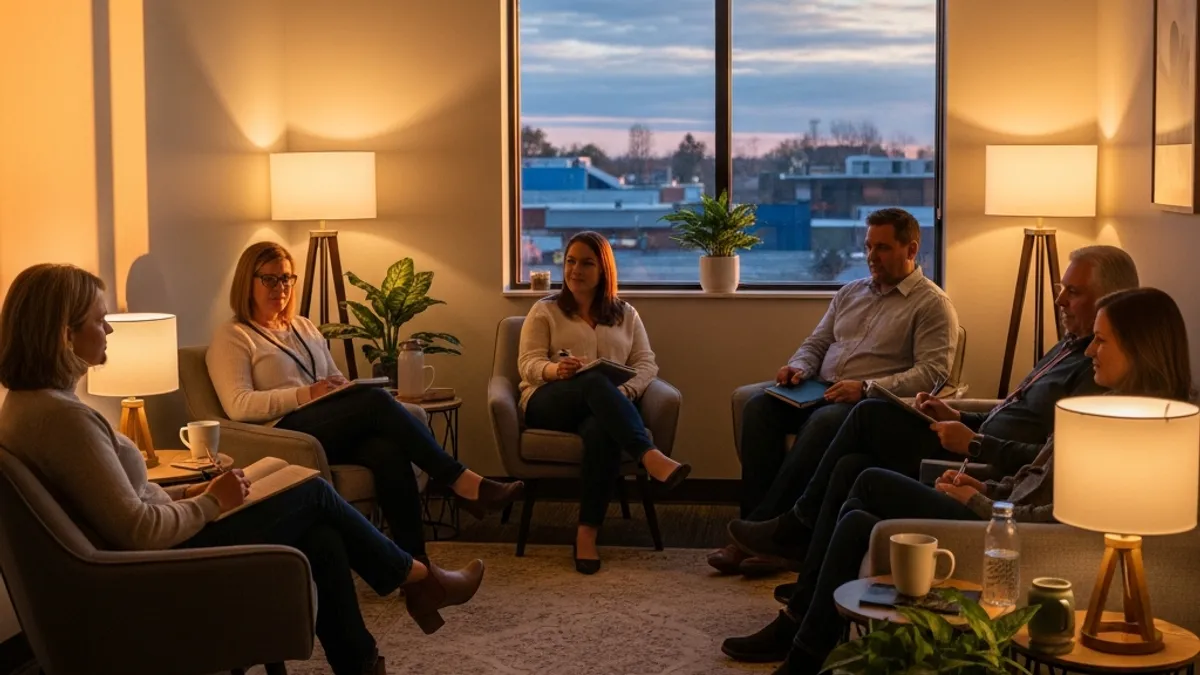
PHP is our most intensive outpatient level, about 30 hours of clinical programming a week, usually Monday through Friday, six hours a day. Each day includes two clinical group sessions, a three-hour recovery group and a second three-hour therapeutic group, with individual therapy worked into the program day rather than a separate appointment. People still go home or to sober living in the evening. Most stay in PHP for two to four weeks, depending on clinical progress and insurance.
Learn more about PHP
Outpatient Level 1
After IOP, some people continue in Outpatient Level 1, which we designed to help protect long-term recovery. It is four hours a week, one three-hour recovery group plus a one-hour individual therapy session. The group is the same evening group other outpatient clients attend, so people stay connected to the recovery community while keeping accountability and clinical support as life moves forward.
Learn more about Outpatient Level 1
Drug and alcohol screening and accountability
Drug and alcohol screening is an important part of outpatient care. PHP, IOP, and Outpatient Level 1 are built for people who can stay abstinent enough to take part safely while living outside a 24-hour monitored setting. That is the real difference from detox or residential: in those settings people are watched over throughout the day; in outpatient they go home, to sober living, or back into the community, where stress and triggers live. Screening helps provide:
- Added accountability
- Support for honest recovery work
- Early identification of relapse or instability
- Clearer decisions about whether someone is in the right level of care
This is not about shame or punishment. It is about protecting recovery and helping the team respond when someone is struggling. If a person cannot stay abstinent on an outpatient basis, that can be a sign they need a higher level of care again, like detox or residential treatment. Recommending that is part of responsible treatment planning. The goal is always to place someone in the level of care that gives them the best chance at safety, stability, and lasting recovery.
A dedicated outpatient location
Outpatient treatment happens at our outpatient office in Carlsbad, separate from the residential home. Because outpatient care is part-time, people come to scheduled sessions and then head home, to work, or to sober living afterward. We serve families throughout North County San Diego, including Carlsbad, Encinitas, Oceanside, San Marcos, and Vista.
The same clinical team, start to finish
One of the most powerful parts of our Continuity of Care model is that people often keep working with the same treatment team they had in residential. No starting over. No retelling your whole story to a new program. The team already knows the history, what contributed to the addiction, the progress made, and the goals set in the treatment plan. Treatment simply continues with less daily intensity as recovery gets stronger.
Where outpatient fits in the Continuity of Care
Outpatient treatment is one stage in a structured progression designed to keep people supported at every step:
- Clinical assessment, to understand what is really going on
- Residential Detox and Withdrawal Management, to stabilize the body safely
- Residential treatment, to address the deeper causes of addiction
- Outpatient programs (IOP, PHP, and Outpatient Level 1), to keep building recovery while returning to daily life
- Structured sober living, supportive housing that helps protect early recovery
- Continuing recovery support, for the long haul
“The beauty of our Continuum of Care model is a consistent treatment team from the beginning of the journey until the client is ready to fly solo. Clients are able to establish trust with their primary counselor, while the team supports them from the first day of care through their transition into the next appropriate stage of recovery.”
Speak with someone who understands
If you are wondering whether outpatient treatment is right for someone you care about, a real conversation can bring a lot of clarity. We can talk through what you are facing, explain the levels of outpatient care, help figure out what fits, and lay out the next steps. You do not need to have it all figured out before you reach out. Our phone line is answered seven days a week, from 8:00 AM–9:00 PM PT. Outside those hours, leave a message or send a text and we will respond as soon as possible. If you need to speak with someone now, call or text (619) 363-4767.
Frequently asked questions
What is outpatient addiction treatment?
Outpatient treatment lets someone keep working on recovery while living outside a residential setting, at home or in sober living. People attend scheduled clinical sessions and then return to daily life, staying connected to a treatment team and recovery community. It fits people who can hold enough stability outside a 24-hour setting to take part safely and honestly.
What levels of outpatient care does Present Moments Recovery offer?
We offer three levels so support can taper gradually: Partial Hospitalization (PHP, about 30 hours a week), Intensive Outpatient (IOP, nine hours a week, usually three evenings), and Outpatient Level 1 (four hours a week). Many people step down through these levels as their stability grows.
Where is your outpatient program located?
Our outpatient treatment takes place at our outpatient office in Carlsbad, separate from the residential home. We serve families throughout North County San Diego, including Carlsbad, Encinitas, Oceanside, San Marcos, and Vista.
Do you drug test during outpatient treatment?
Yes. Drug and alcohol screening is an important part of outpatient care. It is not about shame or punishment, it is about accountability, honest recovery work, and catching instability early so the team can respond and keep someone in the right level of care.
Can my loved one keep working while in outpatient treatment?
Often, yes, especially in IOP and Outpatient Level 1. Evening sessions are designed so people can stay engaged in recovery without stepping away from work, school, or family. PHP is more intensive and runs during the day, so it usually involves a temporary pause from full-time work.
Will my loved one keep the same therapist from residential?
Usually, yes. Continuity of Care is central to how we work, so people often continue with the same clinical team they had in residential or PHP. That means no starting over and no retelling the whole story, treatment just continues with fewer hours as recovery grows stronger.