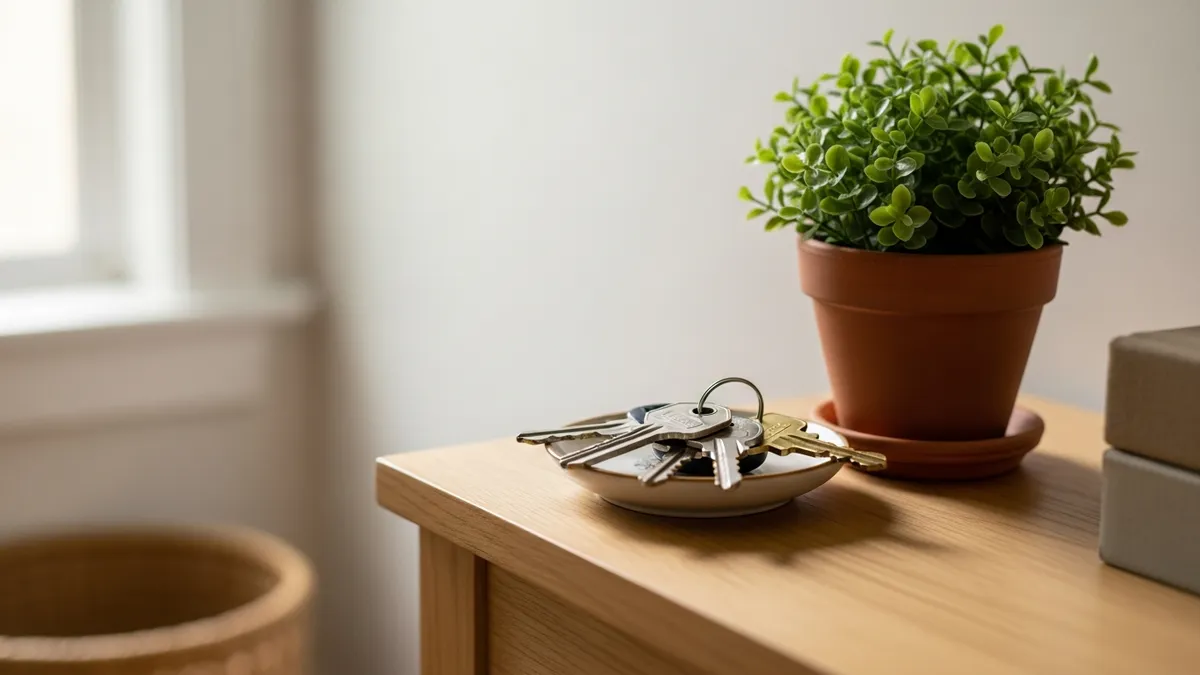
A stable place to land so hard-won progress holds
Completing detox or residential treatment is a real achievement, and it is also a turning point that can feel surprisingly precarious. The structure and support that carried your loved one through treatment falls away the day they walk out, and the demands of ordinary life come rushing back. That gap, between the safety of treatment and the pressures of daily life, is where a lot of early recovery comes undone.
Sober living is designed to bridge exactly that gap. Instead of going from a structured program straight back to old surroundings, your loved one moves into a stable, substance-free home where recovery stays front and center while independence comes back gradually.
Related pages

What Is Structured Sober Living?
Sober living is the bridge between treatment and the rest of life. Here is what structured sober living actually is, who it helps, and how it protects early recovery.
Learn more
Sober Living for Men
By the Sea Recovery, operated by Present Moments Recovery Group, provides separate men-only Structured Sober Living in San Marcos. Learn what life there looks like and how it supports recovery.
Learn more
How Long Should You Stay in Sober Living?
There is no single right answer, but longer often helps. Here is how to think about length of stay in sober living and what the research suggests.
Learn more
Residential Treatment (RTC)
Round-the-clock residential care in a small, single-family home, typically fewer than six clients.
Learn moreOur Continuum of Care
Compare treatment levels and see how support can change as needs change.
Learn moreWhy the transition is so fragile
Early recovery is a period of rapid change. New routines are still forming, relationships are still being repaired, and the coping skills learned in treatment have not yet been tested under real pressure. Returning to the same environment, the same triggers, sometimes the same people, can overwhelm recovery before it has a chance to stabilize. A sober home keeps the supportive scaffolding in place while that work continues.
How sober living fits the Continuity of Care
At Present Moments Recovery, sober living is not a separate, disconnected step. It is part of a connected plan that moves with your loved one through each stage of recovery:
- Medication-Assisted Detox, to stabilize the body safely.
- Residential Treatment, to address the deeper causes of addiction.
- Outpatient Treatment, to continue therapy while living more independently.
- Structured Sober Living, supportive housing that protects recovery through the transition.
Many people live in a sober home while attending outpatient care, so clinical support during the day and a stable home at night reinforce each other. By the Sea Recovery, operated by Present Moments Recovery Group, provides separate men-only Structured Sober Living in San Marcos.
“The beauty of our Continuum of Care model is a consistent treatment team from the beginning of the journey until the client is ready to fly solo. Clients are able to establish trust with their primary counselor, while the team supports them from the first day of care through their transition into the next appropriate stage of recovery.”
Worried about what happens after treatment ends?
You do not have to figure out the next step alone. We can help you plan the move from treatment to sober living so the progress keeps going. Our phone line is answered seven days a week, from 8:00 AM–9:00 PM PT. Outside those hours, leave a message or send a text and we will respond as soon as possible. If you need to speak with someone now, call or text (619) 363-4767.
Frequently asked questions
Why do people go to sober living after treatment?
Because the move from treatment back to daily life is where recovery is most fragile. Sober living keeps a stable, substance-free home and ongoing accountability in place while routines, relationships, and coping skills are still taking root, so progress made in treatment is less likely to unravel.
Can my loved one keep getting treatment while in sober living?
Yes. Many people live in a sober home while attending outpatient care, so they get clinical support during the day and come home to a stable, accountable place at night. At PMR these stages are connected, so there is no starting over between them.
How does sober living connect to the rest of PMR's care?
Sober living may support a connected recovery plan, but it remains separate from PMR clinical treatment. By the Sea Recovery, operated by Present Moments Recovery Group, provides separate men-only Structured Sober Living in San Marcos, North County San Diego.
Why is the move from treatment back to daily life so fragile?
The structure and support that carried your loved one through treatment falls away the day they walk out, and the demands of ordinary life come rushing back. Returning to the same environment, the same triggers, and sometimes the same people can overwhelm recovery before it has stabilized. A sober home keeps the supportive scaffolding in place while new routines and coping skills are still being tested.
Does going to sober living mean my loved one is starting treatment over?
No. Sober living is not a step backward or a fresh start. At PMR it is a connected stage that follows detox, residential, and outpatient care, so there is no starting over between steps. It simply keeps a stable, accountable home in place while independence comes back gradually.