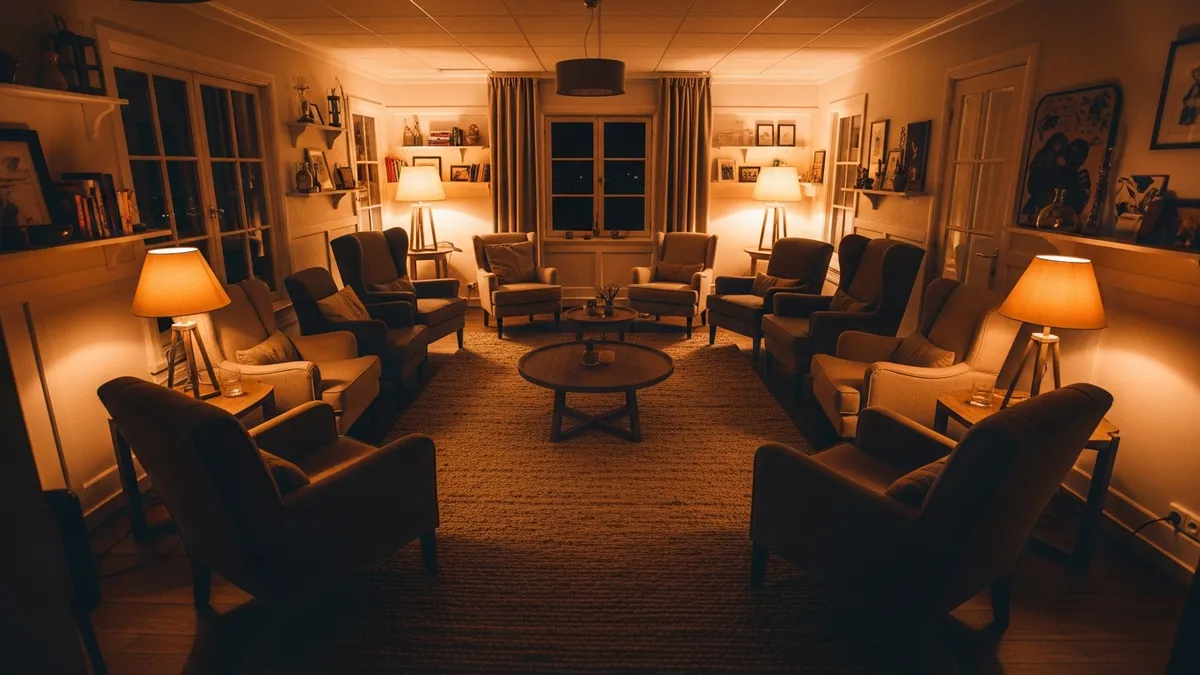
Evening treatment that fits around work, school, and family
Most people walk into their first IOP group carrying two feelings at once: relief that treatment fits around their life, and nerves about sitting in a room with strangers. Both are normal. Within a week or two, the room stops being strangers. It becomes the place where the week gets processed honestly, with people who actually understand.
Keep exploring IOP

Intensive Outpatient (IOP)
A DBT-focused intensive outpatient program in Carlsbad for adults 18+, with flexible day and evening structure.
Learn more
IOP While Working Full Time
Evening IOP exists so treatment and a paycheck do not have to compete. How working professionals and parents make it work.
Learn more
DBT Skills in IOP
Our IOP is built around DBT. Here is what those skills actually are, in plain language, and why they make recovery hold.
Learn more
PHP vs IOP for Cash-Pay Families
Paying for treatment yourself? Here is how we help families weigh PHP against IOP, and why steady, longer-term support often gives the best shot at lasting recovery.
Learn moreThe rhythm of the week
Our IOP is nine hours of clinical treatment a week, usually three three-hour evening groups, often Monday, Wednesday, and Friday. Evening scheduling is deliberate: it lets people keep daytime work, school, and family responsibilities while treatment continues. Most people stay in IOP for six to twelve weeks, depending on progress and insurance coverage.
Inside a session
Each three-hour group blends structure and real talk. A typical evening includes:
- A check-in, where each person names how the week is actually going
- A skills or education segment: DBT skills, relapse-prevention strategies, addiction education, or communication work
- Process time, where real situations from work, family, and daily life come into the room
- Occasional creative and experiential work, including art therapy
- A close-out that sets intentions for the days between sessions
The most valuable material in IOP is not in a workbook. It is what people bring through the door: the tense conversation with a spouse, the coworker who still drinks at lunch, the Friday night that felt shaky. Those situations get worked through with clinical guidance and feedback from peers who get it.
Between sessions
IOP is designed around the fact that most of recovery happens outside the treatment room. Between groups, people practice the skills in real life, and drug and alcohol screening provides accountability and honest footing. If the time between sessions keeps proving too hard, that is important information, and it may mean a higher level of care is the safer fit for now. The goal is always the right level of support, not punishment.
The people in the room
Our IOP is co-ed and serves adults 18 and older at our Carlsbad outpatient office. Some people arrive as a step-down from residential or PHP, still working with the same clinical team. Others start treatment at IOP because it is the level that fits their life and their clinical needs. Both paths are normal.
“The beauty of our Continuum of Care model is a consistent treatment team from the beginning of the journey until the client is ready to fly solo. Clients are able to establish trust with their primary counselor, while the team supports them from the first day of care through their transition into the next appropriate stage of recovery.”
Have questions before your first session?
Ask them. We would rather you walk in informed than nervous. Our phone line is answered seven days a week, from 8:00 AM–9:00 PM PT. Outside those hours, leave a message or send a text and we will respond as soon as possible. If you need to speak with someone now, call or text (619) 363-4767. No pressure, just a conversation.
Frequently asked questions
What happens at a typical IOP session?
Each three-hour evening group includes a check-in, a skills or education segment built around DBT and relapse prevention, process time for real-life situations, and a close-out that sets up the days ahead. Individual needs are woven into the group work by clinicians who know each person.
How many days a week is IOP?
Usually three evenings a week, often Monday, Wednesday, and Friday, three hours each, for nine hours of clinical treatment weekly. Some scheduling flexibility may be available depending on clinical needs and availability.
Is IOP only for people stepping down from residential?
No. Many people step down from residential or PHP, but others start treatment at IOP because it fits their clinical needs and their life. The right entry point is an assessment conversation, not a fixed rule.
Will I have to talk in group?
You will be invited, never forced. Most people find that sharing gets easier fast, because the room is full of people working on the same things. The clinicians pace it so nobody has to perform before they feel ready.
Is there drug testing in IOP?
Yes. Screening is part of outpatient care because most of the week happens in the community. It supports honesty and helps the team catch instability early, so the level of care can adjust before things unravel.