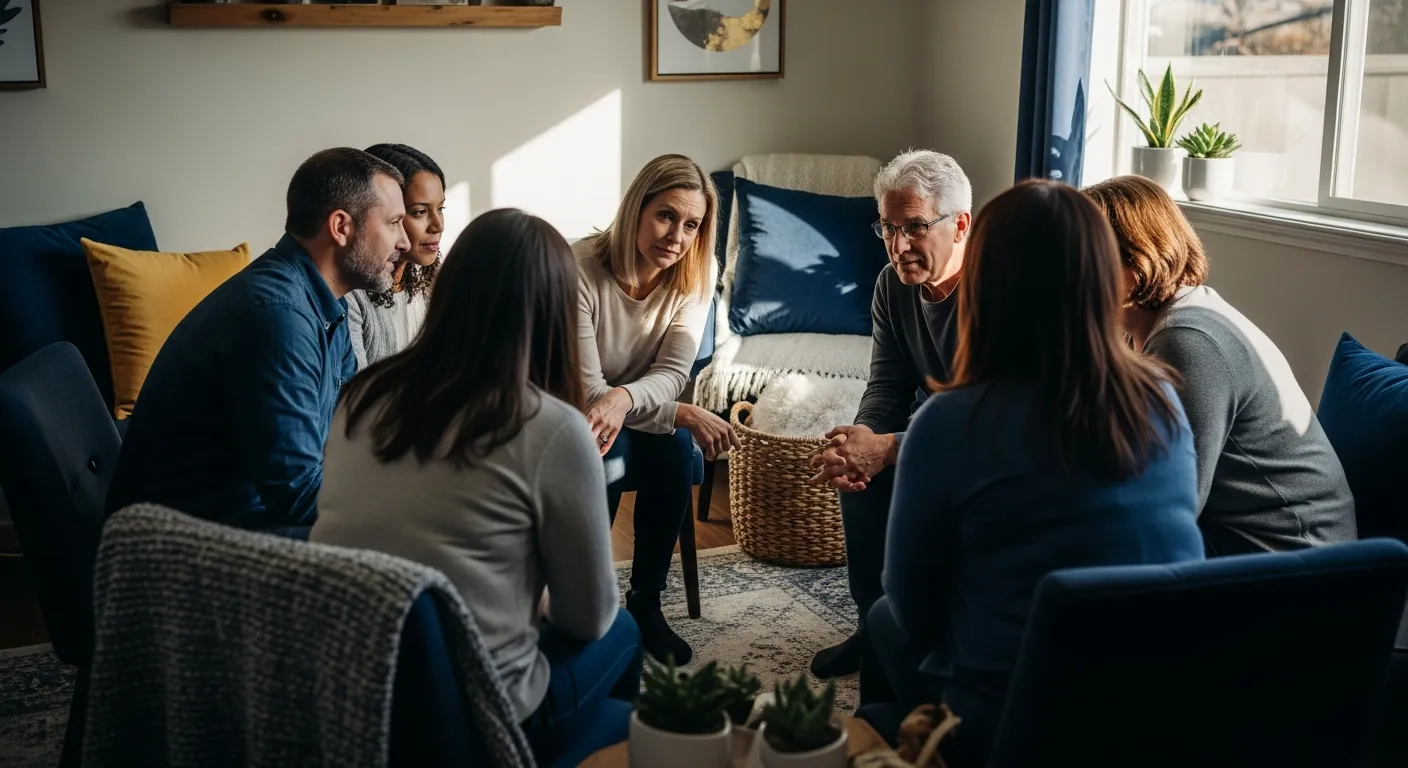
When the whole family heals, recovery grows stronger
Family recovery means the whole family heals, not just the person who went to treatment. Spouses learn to trust again. Parents learn to worry less and connect more. Children learn that home can feel safe and predictable. None of it happens on a schedule, and none of it requires perfection. It requires patience, honesty, and a willingness to keep showing up for one another.
Go deeper

Family Therapy at PMR
Bringing the family into recovery with honest conversation and clear boundaries.
Learn more
Healthy Boundaries in Recovery
How healthy boundaries support recovery, reduce enabling, and strengthen relationships instead of weakening them.
Learn more
Continuing-Care Planning
Ongoing support and a clear written plan for the transitions that follow treatment.
Learn moreRecovery is a family journey
During active addiction, families adapt to survive: hypervigilance, crisis management, walking on eggshells, keeping secrets to keep the peace. Those habits do not vanish the day treatment ends. Everyone in the family has patterns to unlearn and new ones to build. Naming that openly, that everyone is in recovery in their own way, removes a great deal of pressure from the person who just came home and gives every family member a role in the healing.
Rebuilding trust gradually
Trust returns on its own timeline, and it is built from small, repeated moments: being where you said you would be, answering honestly, following through, handling a hard day without disappearing. Families can help by noticing and acknowledging consistency when they see it, and by being honest about where trust still feels fragile. Both things can be true at once. That honesty, without accusation, is healthier than pretending everything is fine or holding the past over someone's head.
Creating new family traditions
Many family routines were built around drinking or shaped by addiction: the holidays that revolved around wine, the gatherings everyone dreaded, the celebrations that ended badly. Recovery is a chance to build new traditions on purpose. Morning walks. Game nights. Sober holidays that feel different, and eventually feel better. New traditions do more than fill time. They give the family shared experiences that belong entirely to this new chapter.
Healthy communication at home
- Ask questions from curiosity, not surveillance; there is a difference between how are you doing and what were you really doing
- Make space for honest answers, including uncomfortable ones, without punishing the honesty
- Talk about the addiction and the recovery openly rather than treating them as unmentionable
- Keep short accounts: address small hurts early instead of letting them accumulate
- Celebrate progress out loud; families are often quicker to name problems than wins
Supporting accountability without policing
There is a real difference between a family that supports accountability and a family that becomes the recovery police. Checking someone's phone, smelling their breath, and monitoring their whereabouts usually damages trust faster than it protects sobriety. Accountability that works is chosen, not imposed: the person in recovery keeps their commitments to meetings, treatment, and honesty, and the family responds to actions over time. Family therapy helps households find that balance, especially in the first months home.
Managing setbacks together
Some families will face a setback, and how the family responds shapes what happens next. A lapse handled with honesty, quick reconnection to support, and a clear-eyed look at what led to it can become a turning point rather than a collapse. Families do not cause relapse, and they cannot prevent it single-handedly. What they can do is keep boundaries steady, avoid shame-driven reactions, and encourage a fast return to treatment and support. Preparing for this possibility in advance, calmly, is wisdom, not pessimism.
Celebrating progress
Families who heal well tend to mark the good moments: recovery anniversaries, a semester finished, a job kept, a holiday that felt genuinely peaceful. Celebration is not naive. It is evidence, gathered together, that the work is producing a life worth protecting. Over time those collected moments become the new family story.
Long-term family wellness
As recovery matures, family healing shifts from crisis repair to ordinary growth: deeper friendships, individual goals, rest, faith or spiritual practice for those who want it, and community connection. Many families stay connected to support long after treatment, through family support groups, continued counseling when helpful, and the recovery community itself. Present Moments Recovery serves families throughout North County San Diego, and our continuum of care means the same team that knows your family remains available as new chapters bring new questions.
“The beauty of our Continuum of Care model is a consistent treatment team from the beginning of the journey until the client is ready to fly solo. Clients are able to establish trust with their primary counselor, while the team supports them from the first day of care through their transition into the next appropriate stage of recovery.”
For families, from Mark Gladden, Founder
If you're reading this as a spouse, parent, child, sibling, or close friend, I want you to know something important: addiction affects families in profound ways, and many loved ones carry guilt, fear, frustration, or grief for years. You are not alone, and you don't have to have all the answers before reaching out. Recovery is often strongest when families heal together, one conversation and one day at a time.
Frequently asked questions
What is family recovery?
Family recovery means the whole family heals from addiction's effects, not just the person who received treatment. It includes rebuilding trust, improving communication, creating healthier patterns and traditions, and each family member addressing their own healing at their own pace.
How long does it take for a family to heal after addiction?
There is no fixed timeline. Some relationships begin improving within months; others need years of patience and continued work. Progress is measured by healthier conversations, growing trust, and steadier daily life rather than by a calendar.
How can we rebuild trust after treatment?
Trust rebuilds through consistent actions repeated over time: honesty, follow-through, and reliability. Families help by acknowledging consistency when they see it and being honest about where trust still feels fragile, without weaponizing the past.
What should we do if our loved one has a setback?
Respond with honesty and speed rather than shame: encourage a quick return to treatment and support, keep boundaries steady, and look together at what led to the setback. A lapse handled well can become a turning point. If safety is ever at risk, seek immediate professional help.
Do families need their own support after treatment ends?
Often, yes. Family support groups, continued counseling, and community connection help loved ones process their own experiences and keep growing. Supporting a person in recovery is easier and healthier when family members are also caring for themselves.